
LWT™ is a community of leaders who act more effectively


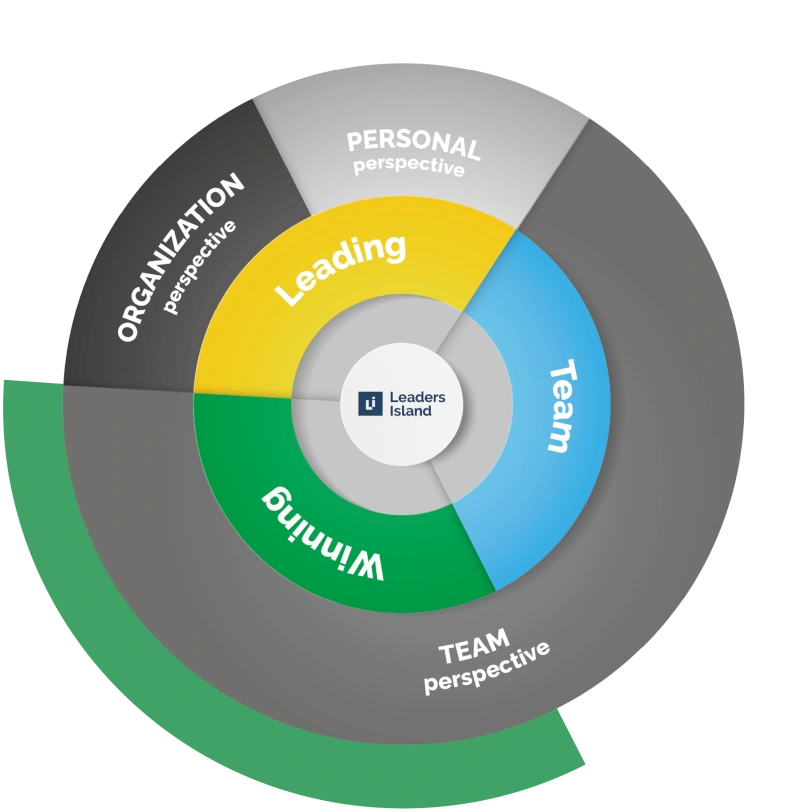
Each of these areas is considered through the prism of three key development perspectives: personal (the leader’s), the organization in which the leader works, and the perspective of other people from the leader’s environment.
The model not only organizes the topics of the workshops, including our flagship “Leader’s Foundation” workshops, but also serves us to assess the level of leaders’ competencies in 1:1 work processes and create Individual Development Plans (IDP), which are based on a simple report describing strengths and areas for the development of leadership competencies.
1. LEADING Pillar
This area focuses on leaders’ self-awareness and the role of self-reflection in personal development. It assumes that deepening knowledge about oneself and the team allows for more effective work with people, understanding the individuals who make up the team, and maturely leading it.


The key elements of this pillar are:
- Identity and role: The leader must be aware of their values, responsibilities, and function performed in the organization. This includes understanding the company’s mission, vision, and values, and effectively implementing them in the team.
- Management style: It is important to know one’s own preferred style of working with the team, as well as the ability to choose leadership attitudes and behaviors adequate to the current situation.
- Building authority: The model emphasizes consciously building authority based on selected sources of influence.
- Change management: The leader must understand the mechanisms of change and their role in guiding the team through a dynamic environment, acting proactively and consciously in change processes.
- Self-discovery: Using tools to deepen self-awareness in order to optimize work with the team.
Schedule a free consultation.
2. WINNING Pillar
This category focuses on the ability to strengthen the team in such a way that it repeatedly achieves the set goals (wins). It focuses on effectiveness, execution, and performance management.

- Managing yourself in time: Understanding which actions increase the individual effectiveness of the leader, and which pose a threat to their role.
- Delegating: Transferring tasks and responsibilities to co-workers. In the LWT model, delegating serves not only to carry out tasks but also to “free up” the leader’s time and develop people and increase team effectiveness.
- Monitoring productivity: Measuring the work of the team and its members to ensure that their talents and competencies are properly utilized.
- Communication and effective feedback: Applying the principles of effective communication and providing constructive feedback. The leader should be predictable in conversations and start them with a “vision of the end”, and be able to conduct difficult conversations with co-workers.
- Motivation: Striving to understand the intrinsic motivation of co-workers and creating working conditions that activate sustained engagement.
3. TEAM Pillar
The third pillar is the art of building teams that are more than just the sum of their individual members. It focuses on group dynamics and relationships.


- Utilizing diversity: The leader should know who they work with, know the strengths and areas for development of their people. It is crucial to see the potential in diversity (e.g., diversity of thought) and use it for effective work.
- Team contract: Establishing and communicating clear rules of cooperation (frameworks), which allows the team to work better and more efficiently. Expectations should be presented at the beginning of cooperation or during significant changes.
- Team identity: Building a sense of community and identity within the group.
- Co-workers’ development: Supporting the development of individuals in the team through daily interactions and defining rules that support achieving goals.
- Working through goals: Setting goals and monitoring progress. The leader understands that goals can motivate or demotivate, and their task is to manage them in such a way that the team achieves them and remains motivated.
- Team effectiveness: Activating factors that make the team act synergistically.
This model therefore integrates working on oneself (Leading), caring for results and processes (Winning), and caring for people and relationships (Team), embedding all of this in the context of specific behaviors and attitudes.
How do we work with the model assessing the leadership competencies of 1:1 development program participants?

During individual, 1:1, sessions (1-3 sessions), we work with participants on assessing competencies through conversation, exercises, and subjective self-assessment. We work on a checklist of topics and after such sessions, participants receive a simple report from us, as well as recommendations for further work on specific topics that fit into building an effective team.
In the case of working on an IDP (Individual Development Plan), working on information from the assessment, we also arrange a development plan embedded in the realities of the organization and the participants’ positions.
The model, checklist, and report can be used multiple times to monitor progress in the development of competencies and attitudes.
Schedule a free consultation.