(Whose fault is it?)
This is the first level of involvement, characterized by asking who messed up and looking for fault in others. It is accompanied by intense emotions like anger, frustration, or shock. Stopping at this level exhausts us emotionally and leads nowhere, so you should try to move to the next stage.
(How to fix this quickly?).
This level focuses on the facts and how to quickly solve the problem to return to a normal state. While a quick fix prevents you from getting stuck, it may be short-lived if the problem is more complicated. Therefore, it is worth moving to the next step.
(What does the situation require of me?)
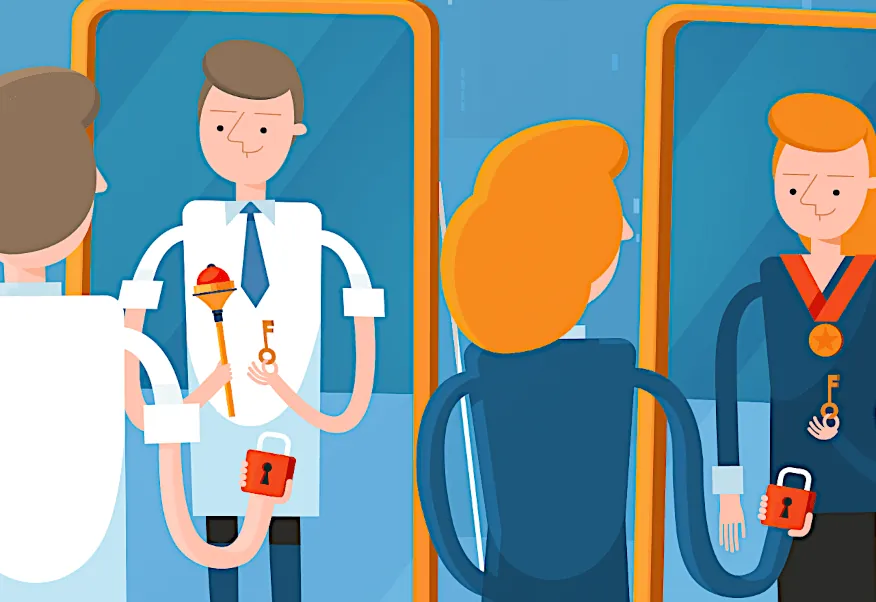
At this stage, you can start working on lasting change by asking yourself about your role in creating the situation and what role you want to have in the future. You consider what kind of person you should be to better deal with the situation, such as being an active listener, a risk-taker, challenging the status quo, or someone more rational.
(What do I want to change?)
The final level involves looking at the situation as a challenge and an opportunity. It invites us to appeal to intuition, to stop and feel the situation, rather than relying only on an intellectual approach. The bigger the crisis, the greater the chance for something new and better in the future. Approaching a challenge as an opportunity allows you to gain some distance, prompting questions like: “What kind of me does this opportunity require?” and “What will be my next steps?”.
There is nothing wrong with any of these stages, but the key is not to get stuck in the first two superficial stages that do not lead to long-term solutions