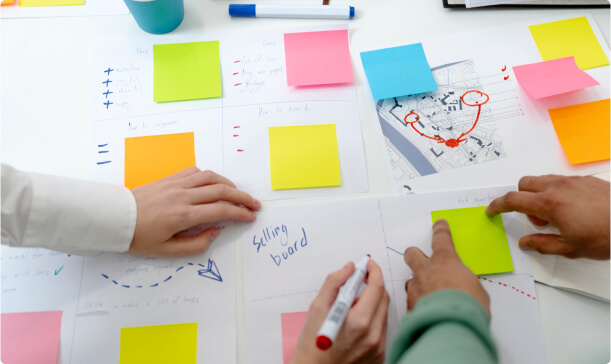
Gather the project team
Select key people from the project (or the whole team, but consider whether a full-team meeting might be counterproductive) who will participate in the meeting.
Create a project summary
Prepare a summary of what happened in the project before the meeting. This could be the result of a retrospective meeting (which you would have had to organize before the post-mortem), or a collection of your knowledge about the project. It is important that your knowledge about the project is comprehensive and takes into account different points of view, e.g., the client’s, developer’s, designer’s, project manager’s, etc..
Organize the meeting
At the meeting, first outline its goal, and then guide the participants by asking various questions and leading a brainstorming session. It is also worth asking questions and positing “controversial” theses, such as: Why (not “whether”) was our communication with the client team too infrequent?
Ask questions during the meeting
Ask questions (also controversial ones), but avoid looking for culprits and blaming team members. Remember that the goal of this analysis is to draw conclusions for the future, and the people present at the meeting should feel safe and comfortable to be able to share what they really think.
Example questions that can guide you include:
- Do you think this project was a success? Why?
- Has this event (or a similar one having the same root cause) happened before? If so, why did it happen again?
- Did anything happen that we didn’t foresee, even though it was possible to do so?
- Do you think we had enough resources to complete the project on time? If not, what resources should have been made available to meet the deadline?
- What did we do well and what conclusions can we draw from this?
- Where were we lucky?
- What did we learn?
- Are we sure this will not happen again?
Set the next steps
In order for the discussion not to be sterile and to bring changes in the future, you must work on the next steps, or “action points”, which will have responsible people assigned to them. Such actions must be verified after some time, e.g., a month. You must make sure that the conclusions drawn are reflected in reality.
Example questions are:
- What can we do to prevent events of this class in the future?
- What are we going to do to prevent this problem from occurring again? Who will take action and when will they finish?
Create and share a summary
The summary should also contain the determined next steps and actions.