Contact
You must ensure appropriate contact with the client and changes in the action plan that are to improve work and provide a better final product.
Time and quality
Teams working according to this method focus on quickly delivering a good quality product, which in subsequent sprints (time periods usually lasting 2 weeks) is improved or changed according to the client’s new requirements.
Sprint
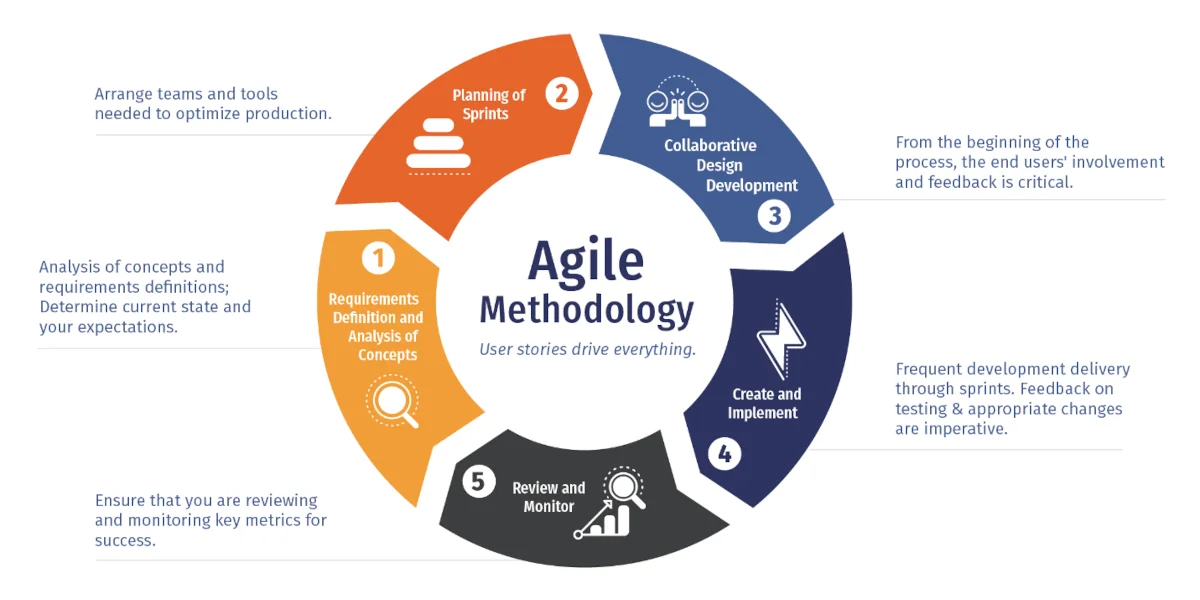
Agile assumes in advance that it is impossible to plan the entire project, which is why it was decided to divide orders into sprints (cycles lasting up to 4 weeks). Sprints are small blocks that cover a defined scope of “things to do”. During these cycles, the team programs, tests, and gives each other feedback, delivering individual parts of the project. Sprints are useful when you care about quick results or when the project changes frequently.
Positive effects
The implementation of each element or functionality brings specific positive effects for the entire project. Thus bringing you closer to a successful conclusion of the project.
Independence and "ownership"
In the Agile method, particular emphasis is also placed on the independence of the team. The team has the opportunity to decide on the workflow without the need to obtain approval from management. Thanks to autonomy, the team also builds a sense of responsibility (ownership) for the work performed.
Flexibility
Thanks to flexibility, the team and individual units can learn, verify, and implement new solutions. The lack of a rigid framework for working on a given project gives the opportunity to change priorities. This improves quality and fast implementation of the project.