
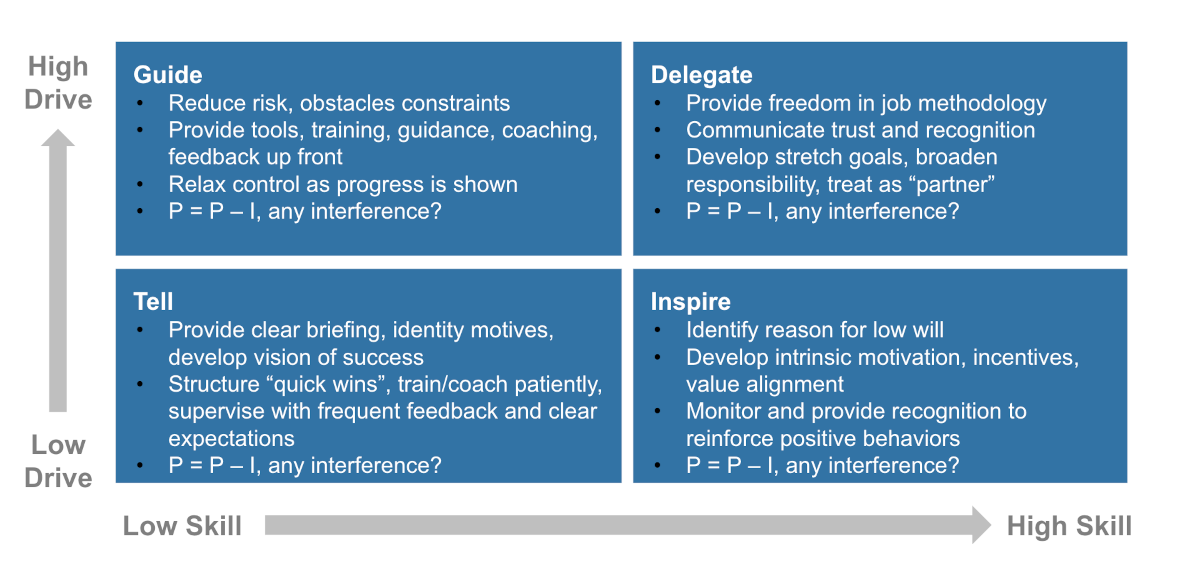

Skill-motivation matrix

The matrix of dependency between skills and motivation helps a leader identify a co-worker’s motivation level, compare it with their skill level, and then choose actions that will allow influencing the person and increasing their motivation. It is worth using this matrix, for example, before 1:1 meetings with team members. How to use the matrix?

Step 1:
High motivation, low skills

Guide:

  • Reduce risks, limitations, barriers
  • Provide tools, training, support, give feedback
  • Reduce control when progress is visible
Step 2:
Low motivation, low skills

Tell:

  • Provide clear tasks, develop a vision of success, goal
  • Arrange “quick wins”, train/coach patiently, supervise by giving frequent feedback and specify expectations
Step 3:
High motivation, high skills

Delegate:

  • Provide freedom in choosing the methodology at work
  • Communicate trust and highlight successes
  • Set ambitious goals, increase responsibility, treat as a partner
Step 4:
Low motivation, high skills

Inspire:

  • Identify the reason for demotivation
  • Develop intrinsic motivation, incentive
  • Monitor and appreciate work to reinforce positive behavior patterns

Other tools  in the area of
Motivation

Moving motivators

The Moving Motivators game helps define the sources of team motivation. The tool comes from the Management 3.0 trend and requires Champfrogs cards. It is a game supporting discussion and opening up team members. Do you know Moving Motivators?

Read more

Top 5 motivators in a team

This tool will allow you to identify the top five motivating factors for your team through a team exercise. After the exercise, the tool will help you find ways to develop. What motivates your team members the most?

Read more
Scroll to Top