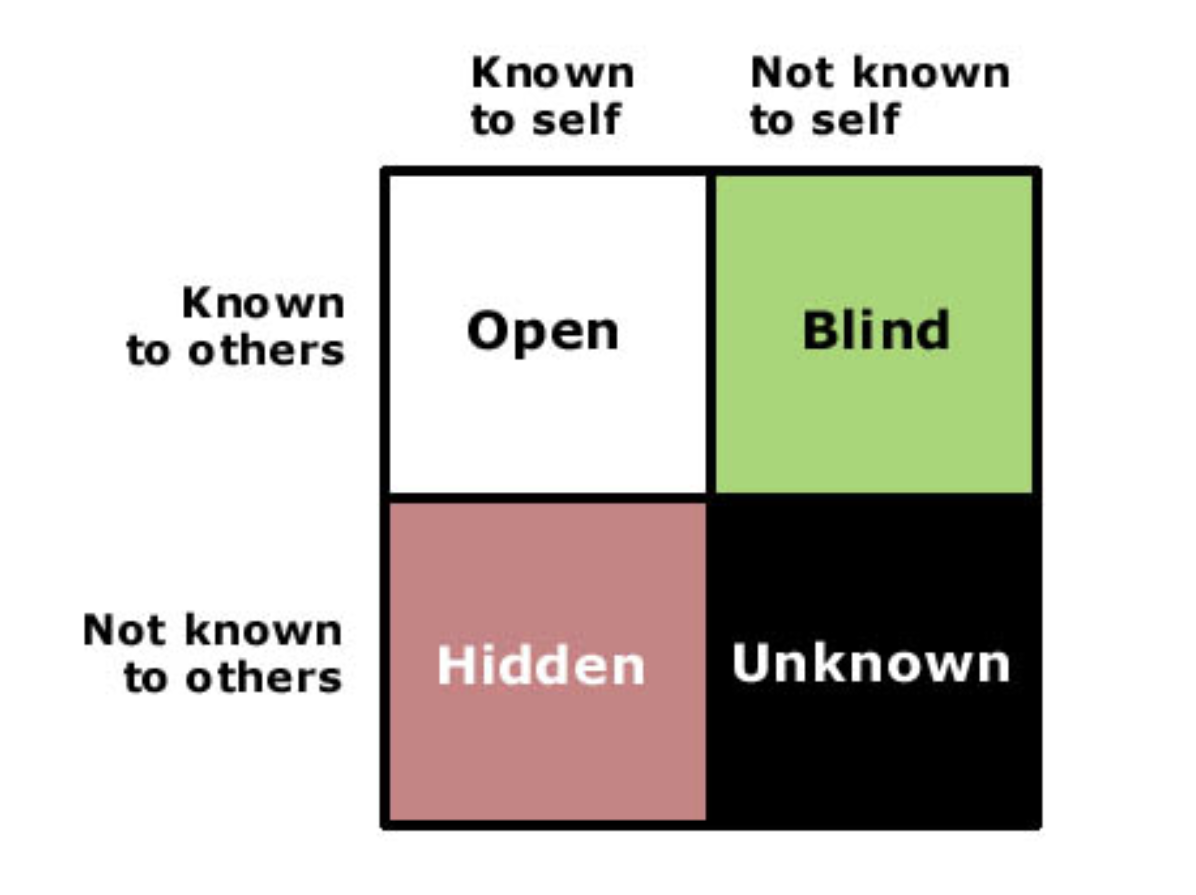
Open area
Freedom of information exchange between a person and a group. This section contains traits, feelings, behaviors, statements, knowledge, skills, and talents that we are aware of and willingly share with others. As familiarity and trust grow, this window gets bigger and bigger.
Ask yourself the question:
What is in my “open area” that I share with others?
Hidden area
Information that we are aware of but do not share with others. These can be taboo subjects, secrets, very personal data, or embarrassing experiences, thoughts, feelings, fears, desires, and fantasies, which is why we keep them secret from others.
Ask yourself the question:
How can I find out more about my “blind” area?
Blind Area
This contains aspects of our personality that are unknown to us but known to others. These are often unintentional messages, such as our reactions, gestures, and habits, which we are not always aware of. This area is often a problematic area because it can be associated with a distorted vision of ourselves, a lack of self-acceptance, an inability to accept criticism, etc.
Ask yourself:
How can I learn more about my blind area?
Unknown area
Our traits, skills, feelings, or fears that no one knows about, not even ourselves. They are hidden “under the surface”, so we are not aware of them. An example could be some trauma from early childhood that we have long forgotten or it was suppressed by other memories, and yet it has an impact on current relationships with other people. This area changes along with the feedback we receive and by observing our behavior during new situations.
Ask yourself the question:
What can I discover in the “unknown” area?