
Leadership Pipeline

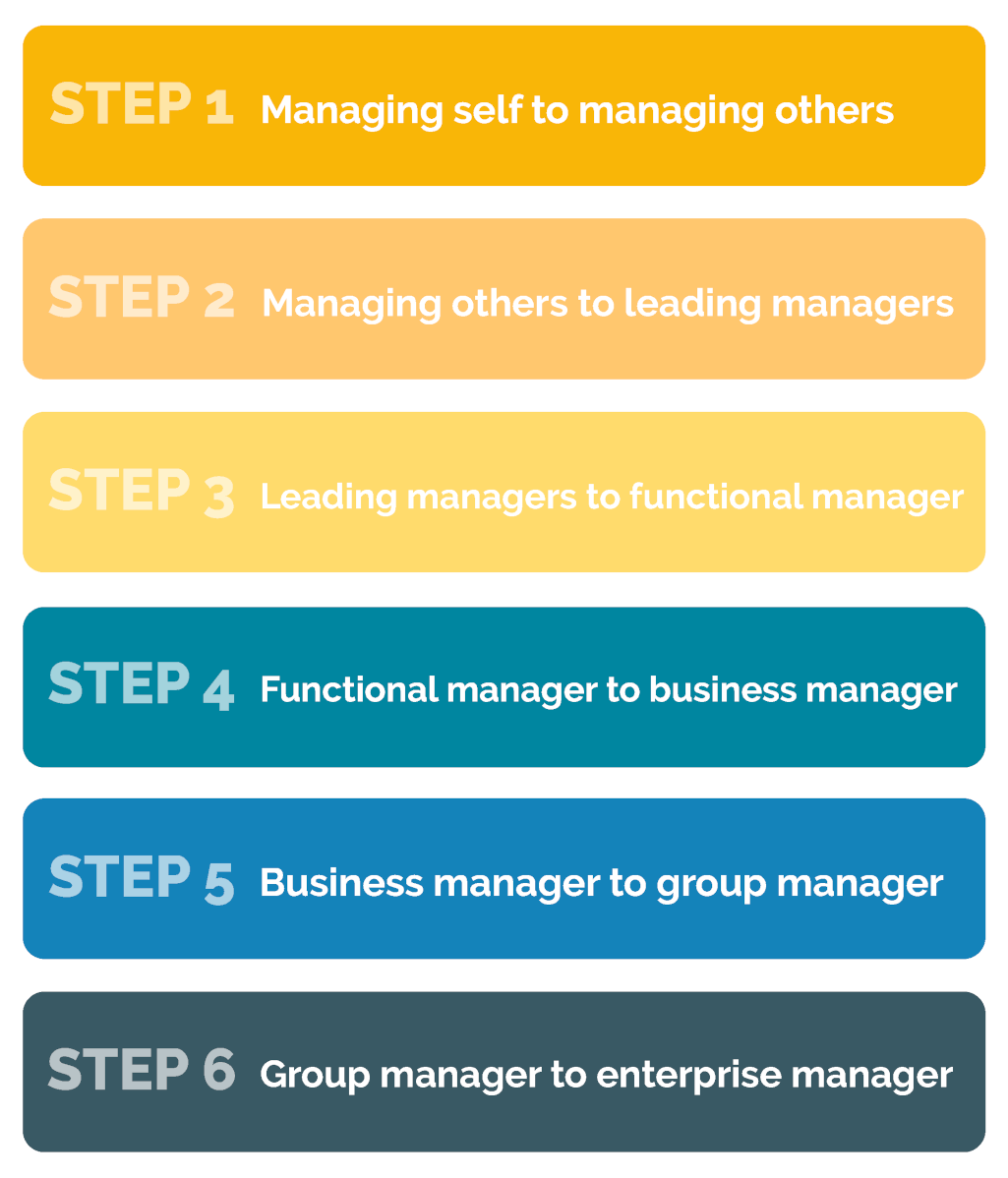
The Leadership Pipeline is a concept of leadership levels developed by Steven Drotter in his 2011 book “The Leadership Pipeline”, helping to make the transition between subsequent stages of leader “advancement”.

We are talking about six (and actually, seven) levels:
– Lead Self – when you are a regular team member
– Lead Others – when you become a team leader
– Lead Leaders – when you lead a team of leaders, e.g., project managers or technical team leaders
– Lead Functions – when you lead an area, department, or cross-departmental leaders in the organization
– Lead Business Unit – when you become a leader of an entire business unit or division
– Lead Group – when you lead a group of companies
– Lead Enterprise – when you manage the entire company, corporation, or holding

Every jump between levels requires the leader to review and change 3 areas of their work: scope of tasks, time allocation, and skills necessary for the position. The LP concept helps design leader development processes in an organization.

Step 1:
Identify your level
Think about what level of leadership you are at according to the LP concept.
Step 2:
Verify your tasks, time allocation, and skills

Answer the questions:

  1. Tasks: What are your tasks at work today? What should they be tomorrow (as a leader) when you get promoted?
  2. Time: How and where do you spend your time today? And tomorrow?
  3. Skills: What are your skills today? What should they be tomorrow (as a leader)?
Step 3:
Verify development opportunities in the organization

Having the answers to the above questions, check what leadership development opportunities your organization gives you.

Check with your leader or HR department how you can increase your skills, or if tasks from a higher level are available to perform. Plan your development together.

Other tools  in the area of
My function

Leadership Septagon

The Leadership Septagon is an approach that will allow you to understand what roles you play in interaction with your co-workers, what your strengths are, and areas for development in a given area. What roles do you play for your team? Aren’t you focusing too much on one of them?

Read more
Samoświadomość lidera

Situational leadership

Situational leadership is a management method that involves adjusting the leadership style to the situation and the needs of the team. It will allow you to understand in what situations a given management style is useful or problematic. How do you manage in critical situations or when you have a new team?

Read more
Scroll to Top