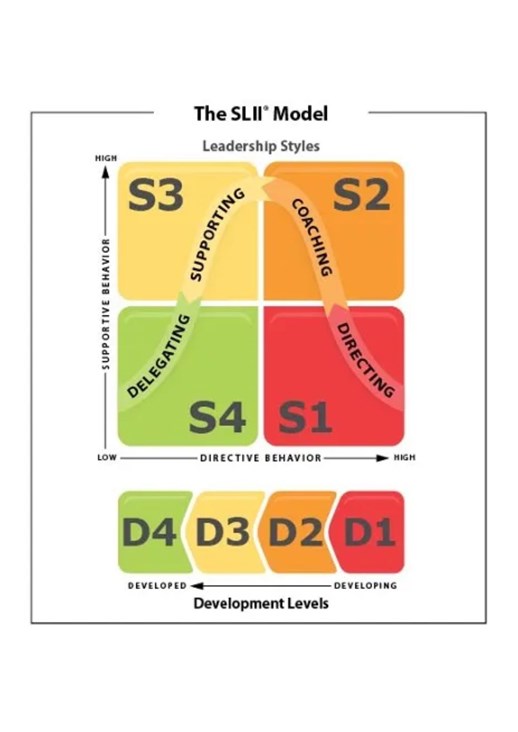
Analysis
The first step is to determine at what stage of development your employees are. To determine this, you must know their competencies, knowledge, and skills. This is necessary to determine which leadership style will work best in your team.
Choice of leadership style
Autocratic style:
The leader in this management style must clearly define goals, support the employee, help them in planning and organizing activities. This style is most often used when the team is new or the situation requires quick decisions. The leader must supervise the work and correct it on an ongoing basis.
Integrating style:
The leader still directs the employees, but involves them more in the decision-making process. This style is used when the team has some skills but needs support. In this style, the leader helps build the employee’s belief in their own capabilities.
Participatory style:
The leader and the team make decisions together. By their behavior, the leader should encourage the employee to discuss, share their own experience, and above all, support independent task solving. A style used when the team is already mature.
Delegating style:
The leader gives employees great autonomy in making decisions. The style is used when the team has been mature and competent for a long time. Employees are able to perform almost all tasks on their own. The leader encourages
independence and increases the employee’s responsibility.
Monitoring
It is worth explaining to the team why you chose a given leadership style and what you expect from them. This will help you avoid misunderstandings.
Monitorowanie
You should monitor and assess whether the leadership style you chose works properly and fix possible mistakes so that the team develops and works more effectively